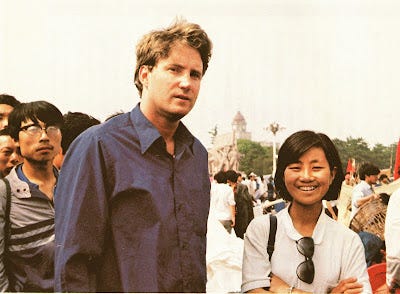
May 28, 1989: LAST WILL AND TESTAMENT
“This may be my last chance to talk, I entrust 金培力 (Jin Peili) Philip Cunningham to tell my story to the Chinese people of the world. —Chai Ling, MAY 28, 1989 10:25 AM”
TIANANMEN MOON is available as an epub through Blackberry Books, sold directly through China Story. It is also on sale as a Kindle e-book on Amazon.
Last Will and Testament (excerpt from May 28, 1989)
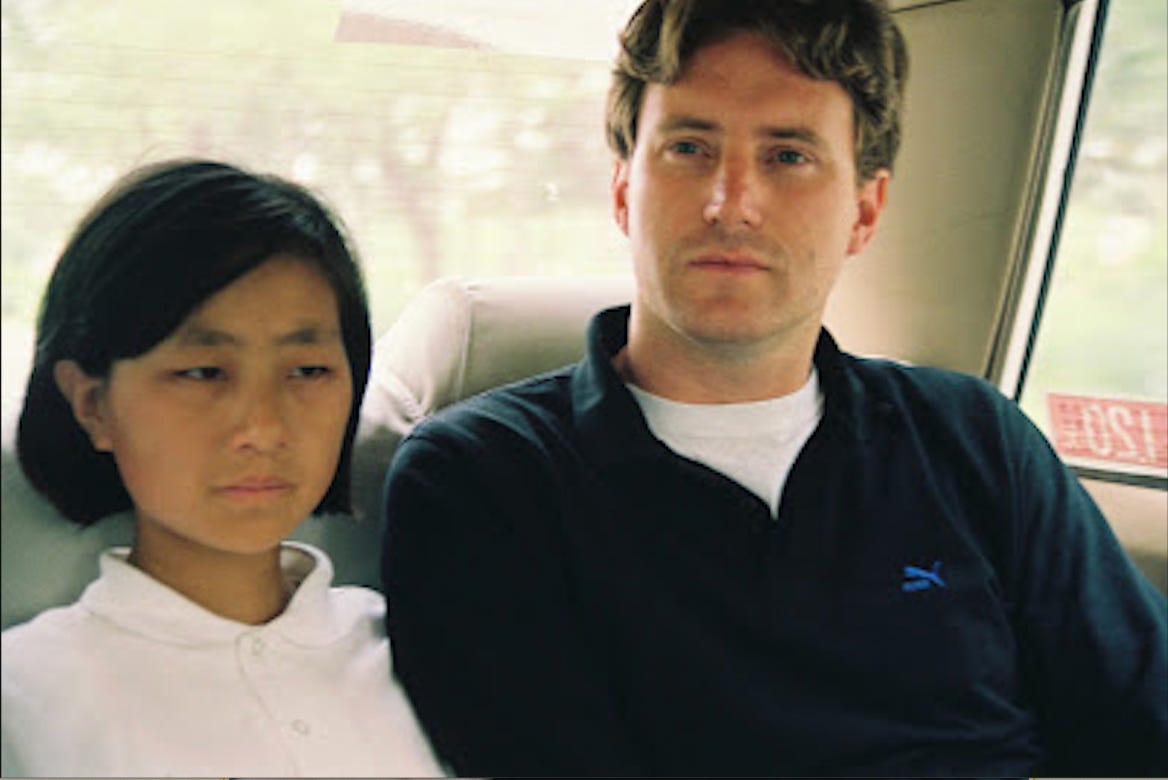
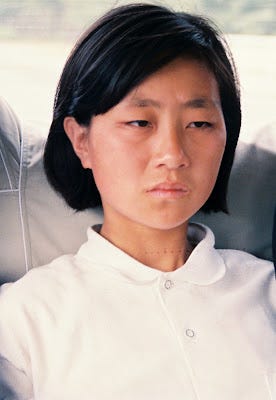
…a sun-bronzed woman of small stature wearing a stained white tennis shirt and dusty beige trousers sits next to me in the back of the taxi, grimacing as if in pain, weeping quietly to herself. Named to the police blacklist, she says she fears imminent arrest. Up front, the driver sullenly surveys the streets, scanning the road for Public Security vehicles.
As the car glides down a leafy thoroughfare in the diplomatic district, Wang Li, who had been chatting quietly with the driver, turns around to make an announcement.
“The driver supports the students,” he says. “He will help us.”
“How do you know?” I ask.
“I know. Where you go?” he asks, switching into English.
“Tell him, let’s see ... I don’t know, I just don’t know.”
Chai Ling, the self-proclaimed commander-in-chief of Tiananmen Square, had come to me this morning, saying she wanted to “talk,” but for the moment, I couldn’t get a word out of her. I had brought a small tape recorder and camera along as part of my hasty response to the startling and unsolicited request for an interview, but we had yet to find a safe place to talk.
A graduate student from Shandong studying psychology at Shida, she rose to sudden prominence during the world’s biggest hunger strike. This morning, she had approached me in the hallway of the Beijing Hotel as I was on my way to breakfast. It was so weird seeing her there, a fugitive from the police hiding in plain sight in a government hotel lobby. I naively invited her to join Bright, Wang Li, and me for breakfast in the Western Restaurant in the old wing of the hotel. However, this wasn’t a problem that could be worked out over coffee and eggs.
Face drawn with tension, almost morbidly silent, the famous hunger striker, who barely gave her food a second glance, explained in a low whisper that she wanted to record some kind of final statement, a sort of last will and testament. I looked at Bright, who declined to offer an opinion, though her eyes implored me not to get involved.
I got involved, mostly out of curiosity. It didn’t make for a leisurely breakfast, and it left Bright, who had just come to see me, in the lurch, for in no time I was trying to secure a taxi at the front door of the hotel. Chai Ling had so far escaped the notice of the police, but not a group of hawkeyed journalists from Hong Kong, one of whom recognized her as the Tiananmen commander and begged to join us.
No matter how we tried to squeeze in, there wasn’t enough room in the taxi, so Bright, who was already less than enthused about radical student politics, offered her seat to Patricia, the Hong Kong journalist, and then we were off.
Now we were on the road. Where to?
“Let’s go northeast,” I suggest. “Take the road by Worker’s Stadium, then go to the Great Wall Hotel, you know, around there. Do a big circle around the whole embassy district, okay, we just want to drive around for a while, okay?”
What should we do now? If the fugitive pressing against me in the backseat is truly in danger of arrest, maybe we should go further out of town. In any case, we can stay on the road for a while. The taxi is not cheap, but if no place is safe, is it not better to keep moving?
“If policeman follow,” Wang Li says, turning around to peer at us, “I tell you, okay?”
He is speaking English again. What is it with his sudden switch? Who is he trying to impress?
“Where is camera?” he asks a moment later, and then I understand. I get the feeling that Wang Li, a student at a culinary school in the provinces, is trying to impress Chai Ling, the radical diva from Shida, who has already bagged a degree from Beida.
No sooner had I handed him my pocket-sized Olympus than he started snapping away with dramatic flair, as if he were a hotshot photojournalist.
While the driver patiently snaked up and down the leafy boulevards of Sanlitun, I suggested to the conspicuously silent woman warrior sitting next to me that we talk now, in the car, but she recoiled from the idea. True, some taxis were bugged, but the odds of that were slim. True, the car was probably too noisy to make a decent recording, but what was all this about, anyway? Even if the driver was later quizzed about suspicious passengers and duly filed a report on us, we would be somewhere else, sight unseen.
Despite Wang Li’s eagle-eyed examination of cars going our way, he didn’t think we were being followed. For the last few weeks, Beijing’s secret police had been slacking off on the job, at least, it seemed that way. It was enough to make one believe in rumors; either Politburo member Qiao Shi and his Public Security Bureau were sympathetic to the students, or the pullback of policing was a deliberate trap.
Chai Ling, lost in a silence so deep that she seemed almost voiceless, quietly vetoed the idea of doing an interview in the car. Instead of talking, she penned a stark message on a piece of scrap paper:
“This may be my last chance to talk, I entrust 金培力 (Jin Peili) Philip Cunningham to tell my story to the Chinese people of the world. —Chai Ling, MAY 28, 1989 10:25 AM”
Her extended silence gave me time to contemplate the import of the note. I was both moved and disturbed that someone in fear of her life wanted me to speak “to the Chinese people of the world” on her behalf.
Holding in my sweaty palm what was essentially a last will and testament made me realize how quickly the tables had turned. Was this the same defiant young rebel who had risen to prominence during the hunger strike, supported by enthusiastic crowds of a million or more? Was this the leader of the square, the strident voice of the public address system, the Joan of Arc of the movement who refused to talk to journalists?
Little of that was evident now. The intense young woman who sidled up next to me in the back of the taxi was in a deep funk, vulnerable, isolated in her own heavy thoughts; the only ambition she betrayed was her quiet persistence in trying to arrange an interview.
“So, where are you going?” the taxi driver asks, shooting me an impatient look in the mirror. For all of Wang Li’s shenanigans, he has failed to impress even the driver. It is also safe to assume that the driver expects the foreigner to do the paying, in FEC, of course. But if he were greedy, he wouldn’t have minded the last half an hour of going in circles. What he minds is the lack of clarity about our destination.
“I’m thinking,” I answer. “Just go north for a while.”
All I knew was that we had to escape from the omnipresent gaze of the state security apparatus. I gave the driver some seemingly firm coordinates, north, east, north, east, as I needed to keep him busy until I could come up with a safe destination. It was against the rules of martial law for journalists to interview student leaders, and I wasn’t even on a work visa.
I’d been arrested before for activities inappropriate for a foreigner and didn’t relish being taken into custody again. Where could we do such an interview? I leaned forward, face in my hands, unsure of what to do next.
The temporary BBC office in the Great Wall Hotel came to mind, but it was a day too late, because yesterday was my last day working for them. And the BBC’s London-centric producers were not exactly sensitive to things I cared about. For one, they struck me as nonchalant if not naïve about the degree of government surveillance they themselves were under and the possible impact it might have on any Chinese who visited their monitored offices. I knew better than to bring apolitical friends into such a fishbowl environment, let alone a student rebel on the police blacklist.
The American TV news outfits had similar security problems. I knew Eric Baculinao, a former student radical from the Philippines, would be interested, but NBC’s office was no place to bring a fugitive from the police. NBC was nested in the belly of the beast, renting facilities inside the state-run CCTV television center.
CBS News had chosen to set up camp way out in the west Beijing boondocks, ensconced in the comfortable but remote Shangri-La Hotel, while CNN and ABC at least had the advantage of being on this side of town.
But taking a wanted student leader to a news bureau full of official snoopers and electronic surveillance was risky if not stupid. We had to go somewhere unofficial, somewhere off the map. The kind of place I’d take a friend, the kind of place I’d be comfortable taking a date.
“That’s it! I know a place!” I announce, giving the driver directions to an expatriate apartment complex out on Airport Road. If we got past the front gate and then past the doorman in my friend’s apartment block, we’d be okay.
The car picked up speed. After half an hour of random turns and amateur plotting on the part of the unusual collection of passengers, the driver was relieved to get some concrete instructions so he could be done with us.
Finding an unmonitored residential location where foreigners and Chinese could mix without being carded and closely observed by guards at the door was a thorny problem in Beijing, especially vexing for practitioners of free cultural exchange like myself. The system ensured foreigners socialized with foreigners, tourists with tourists, and Chinese with Chinese. Maybe we could make that work for us.
On this day, our group defied easy categorization, composed as it was of two Chinese citizens, one a fugitive listed on a police most-wanted list, the other a young rebel not nearly as well known as he wanted to be, and two non-Chinese, an aggressive Hong Kong reporter and an American freelancer less than enthusiastic about playing journalist with police on our tail.
In a way, I was the most obvious problem. Being the only laowai made me a lightning rod for attention. Caucasians in China, whether newly arrived or long-term residents, did not have the option of disappearing like a fish in the sea of the people. We brought attention to ourselves without even trying.
The best way to become less glaringly obvious was to find an enclave where there were lots of other equally distracting people, such as a suburban hotel designated for foreigners or an expatriate residential compound.
I chose the latter. Living in gritty Beijing had given me some practical experience in seeking out comfort zones. Wanting to avoid the watchful gaze of the police rarely had anything to do with politics. It was more a matter of pride, an effort to establish a sense of human dignity and to lead a half-normal social life. While I was aware that even native Chinese couples had problems of their own finding privacy, at least they could meet with relative anonymity in an apartment block or even in a gated park, whereas a mixed couple was an easy target for neighborhood snoops and zealous watchmen.
One place where I had found a semblance of normalcy on previous occasions was the Lido Hotel and its associated apartment complex, located on the northeast edge of town. Though the Lido was technically restricted to foreign passport holders, it had a large ethnic Chinese population from overseas, and it was easy enough to bring Chinese friends inside to use the pool and eat in the restaurants there. Bright and Jenni both liked it; they found it less intimidating than the grander hotels. But it was still a hotel with hotel surveillance.
As the driver approached the Lido, I advised him not to use the main gate of the hotel but instead to go around to the back to enter the apartment complex directly. The driver paused at the rear gate while the sleepy guard gave us a brief visual inspection. Waved through like a carload of daytrippers, we all breathed a bit easier once inside the compound. I had the driver follow the meandering course of a private drive that led us past a pair of empty tennis courts adjacent to a low-rise apartment block.
Wang Li and I briefly discussed the merits of keeping the car, since taxis were a rarity, and a new one might be hard to find. But the driver, whose suspicions had been aroused, had no interest in waiting, so I paid him, and he sped off. If he were to be questioned, he could always plead ignorance.
I led the way, taking a deliberately roundabout course to limit the likelihood of being followed. We went in one door and out another, detouring past well-stocked shops, including a pharmacy and a grocery stocked with pricey imported goods from Europe, Hong Kong, and America. As we walked past window displays and shelves stocked with consumer items that most Chinese could only dream about, Wang Li paused to clean his smudged glasses for a better look. I could tell he liked the place already.
Adjacent to the shopping wing of the Lido was a quiet path leading to the low-rise tower where Lotus and Albert lived. Wang Li sidled up to me as he surveyed the premises with interest. “Almost no Chinese around,” he exclaimed, nodding his head in approval. Chai Ling and the Hong Kong journalist, both about the same height with hair about the same length, followed silently a few steps behind, like traditional women.
I shepherded our group past the front desk of the “foreigners-only” apartment building, hoping it wouldn’t be necessary to answer any questions, but if it was, it fell on me to do all the talking.
As luck had it, the doorman was not at his station, so we easily slipped into the dark lobby and hurried into a waiting elevator. I heard the guard returning to his post just as the elevator door closed. So far, so good. By force of habit, I checked the ceiling of the elevator for the protruding lens of the surveillance camera, a common fixture in some buildings, usually wedged in the corner, but there was no sign of that.
We got out on the top floor, and I ran ahead to the door of Lotus and Albert’s apartment, knocking excitedly. The door opened a crack.
“Who’s there?” asked Lotus, clearly not expecting company.
“It’s me, Philip,” I said. The chain was undone, and the door opened wide.
Lotus smiled warmly. “Philip! Good to see you!” she exclaimed buoyantly. “I see you brought some friends. Come in. Welcome everyone. Come in!”
She greeted me with her customary bear hug. “You just missed Al. He went out to play basketball with Justin.”
“Lotus,” I started, “I gotta talk to you. We have an unusual situation here.”
“That can wait, Philip, first things first.”
Lotus was possessed with the angelic patience of motherhood, the nonstop experience in dealing with unusual situations. She gave my disheveled friends an approving look and greeted each of them warmly in Chinese. She knew the face of someone in trouble when she saw it, and put her arm around the gaunt, almost catatonic Chai Ling as if to comfort her before I even had a chance to make introductions.
“Come on, come on inside!” she said. “Don’t be so polite! You all look so hot and tired. Let me fix you something to drink.”
“Lotus, this is Chai Ling, a student leader from Tiananmen ...”
To Lotus, the name or fame of a person mattered not a bit. But the fact that I brought along a protester from Tiananmen Square did. Lotus, still a sixties activist at heart and a true believer in people power, the power of ordinary, everyday people, that is, had been an enthusiastic observer of the demonstrations since the students started marching.
She had us sit down in the American-style dining room while she scurried about the kitchen, putting the kettle on and preparing some snacks. Wang Li scrutinized the apartment intently. Was he judging it for security features or just trying to sate his unquenchable curiosity about the world of luxury and privilege behind high walls, a world from which ordinary Chinese were normally barred? Unable to remain still for long, he leapt up and joined Lotus in the kitchen to get a closer look at some of the modern, imported appliances.
When Lotus tried to make some small talk in Chinese, she used a motherly tone of voice that reminded me of the way she spoke to her daughter in front of guests.
“Philip has many Chinese friends. Even though he is a foreigner, a white foreigner, he likes to be with Chinese people.” She went on and on, sometimes switching to Mandarin, her accent even more heavily Cantonese-inflected than that of the junior journalist from Hong Kong.
“Lotus, come on already!” I was impatient, not only because I’d heard this description a dozen times before, but because we had more important things to worry about.
“This girl, I mean this woman, is on the run,” I explained, imploring my host for her full attention. “She wants to talk about something, something serious.”
Lotus looked at me with a quizzical smile, not fully comprehending.
“Sorry, I don’t know if it was a good idea to bring her here, but we are really in a bind. I hope this doesn’t get you into trouble, at least I don’t think we were followed.”
My friend in need read between the lines expertly. “Are you asking me if this place is bugged? The apartment, I don’t know, probably not. But the telephone? Yes.”
“I don’t want to get you and Al in trouble. I mean, he works for a big company, you’ve got your family here. This could be a bit risky.”
Lotus and Al, like many of their peers from the top of the baby-boomer generation, enjoyed a solid income from the corporate world but still had a lingering fondness for radical causes. And they were sincere about it.
“Look, what are friends for? I want you to relax with your friends for a minute. I will talk to Al when he gets back.”
“Where can we talk?”
“Just make yourselves at home,” she answered.
“Boy, it’s noisy here. What’s that outside? Construction or something?” As I pulled the small handheld tape recorder out of my bag, I realized with some disappointment that we had traveled a long way only to find a noisy location. “I want to do a taped interview.”
“Nia’s room is quiet,” Lotus volunteered. Nia, whose name was inspired by the word Tanzania in recognition of early Chinese Communist efforts at diplomatic outreach to Africa, was just on the cusp of her teenage years.
Lotus knocked tentatively on the door of her daughter’s room. “Nia? Can you come out for a minute? I’d like you to say hello to Uncle Philip and his friends.”
Nia reluctantly emerged, mumbled a shy hello, and ran back into her room, closing the door.
“Uncle Philip and his friends would like to talk in your room,” Lotus added, trying to coax her pretty teenager out of her private fortress. “Is that okay, honey?”
The door popped open a crack, and Nia peeked out, as if in partial acquiescence to her mother’s request, but the look on her face indicated it was anything but okay. She was probably wondering why Uncle Philip and the visitors couldn’t just talk in the living room like regular grown-ups did.
“Nia, please come into the kitchen. I want to talk with you about something,” Lotus insisted. As soon as the teenager was pried from her room, we got the green light. “Okay, guys, go ahead. Sit down inside, sit down! Nia said you can borrow her room. Right, Nia?”
We awkwardly filed into the small bedroom, acutely aware we were invading the private realm of a teenage princess. There were dolls and teddy bears, a McDonald’s poster, an unmade bed of pastel sheets, and an armchair.
“Everything okay?” Lotus inquired.
“I guess so, um-huh.”
“Just a minute!” Lotus disappeared, seeking to placate Nia, who was understandably confused.
After getting Nia settled in the living room to watch TV, Lotus busied herself in the kitchen. “That’s a good girl,” I heard her say to her daughter before she came back to us with a tray of sliced oranges. “Sorry, I don’t have anything better than this.”
“Oh, thanks,” I said, taking the tray and putting it down.
“Philip?” Lotus said with a touch of admonishment. “Why don’t you serve these to your friends?”
“Thanks, of course,” I passed the orange slices around, then asked Lotus if I could borrow her video camera.
“You want the Handycam? You’re lucky. I just charged the batteries. They will last for two hours. Is that long enough?”
“I certainly hope so,” I answered with a laugh. I figured this thing, whatever it was, would be over in five, ten minutes, max. While Lotus went to get the camera, I examined the room.
With the window closed and the air conditioner off, the room was quiet enough for an interview, but with four of us in there, it was already starting to get quite stuffy. I decided to open the Venetian blinds for illumination but it also invited in the dry heat of the sun. Wang Li peered out the window to survey the surrounding courtyards before settling next to Patricia on the floor at the foot of the bed.
Lotus came back in and snuggled into the armchair, fidgeting with the dials and buttons of her camera. I moved some stuffed animals out of the way so that Chai Ling and I could sit down next to each other on the bed facing Lotus and the camera. I conferred quietly with Chai Ling in Chinese, instructing her to introduce herself and tell us about the student movement.
“Do you have enough light, Lotus?” I asked, switching to English. “How’s the sound?”
For some reason, Chai Ling took my comments to Lotus as a cue to begin talking.
“The police are looking for me,” Chai Ling started, breaking her long silence. “My name is on a blacklist. If I am caught, I will get fifteen years in prison.”
I got the tape recorder rolling, but Lotus was still fiddling with the camera. Meanwhile, the cramped, poorly ventilated room was starting to feel like a sauna.
“I’m sorry, just a minute, please,” I said, trying to cue Chai Ling to the camera. “Lotus, are you ready?”
Our hostess had finally found a reasonably comfortable way to film without a tripod by scrunching up in the armchair, balancing the camera on her knees. “Okay, Chai Ling,” I said, signaling the start of the interview. “Why don’t you tell us who you are and how you got involved in the student movement?”
My interview subject was slow to react, as if weighted down by her own thoughts. She looked away from the camera, staring blankly at the wall.
“No, I think it’s better if you look this way,” I said, pointing to the blinking red light of the camera. “Here, hold the tape recorder yourself.”
The student leader took the compact cassette recorder and held it in front of her mouth, as if she were addressing her followers with a megaphone. I motioned for her to move it away from her face; maybe put it in her lap.
“Okay, let’s start. What do you want to say?”
“I think these might be my last words. The situation is getting grim,” she said, words emerging slowly and methodically at first.
“My name is Chai Ling. I am twenty-three years old. Isn’t it strange, my birthday was on April fifteenth, the same day that Hu Yaobang died?”
Her birthday marked the beginning of the student movement. She explained that she was from Shandong Province, a graduate of Beijing University, and was now studying child psychology at Beijing Normal University. Although her verbal delivery was fast and furious, her voice never got louder than a desperate whisper. I urged her to speak up.
“Ever since April eighteenth, I became active in the movement. It was very tense; everyone was hungry from waiting so long for Li Peng to come out and receive us. We wanted to pay our respects at the memorial service for Hu Yaobang.”
The words began to unroll and pick up speed, like a torrent.
“But the government just put us off, so we were very angry. Some students wanted to break into the Great Hall of the People. But that would have ended up in bloodshed.”
Bloodshed. So far, there had been none—one of the most remarkable things about the student movement to date. But she was right to raise the specter of it, for, from the start, there had never been a moment when violence was not in the back of people’s minds. A crackdown, sooner or later, had always been anticipated, and if I could conclude anything from the worried mood of this rash and clandestine tryst, the idyllic peaceful days were over. Conflict was imminent.